Pole dancing is more than acrobatics and aesthetics—it’s an art form, a therapy session, and a personal revolution rolled into one. For many, it’s a lifeline. A way of moving through the pain. A return to strength, sensuality, and self.
But can pole dancing really heal? Let’s look into the science of movement, emotion, and empowerment—and how dancing with a pole can unlock hidden strength and resilience in the body and mind.
Pole Dancing as a Pathway to Healing
When life leaves us broken—emotionally, mentally, even physically sometimes—we often feel disconnected from our bodies. Trauma can sit in our hips, our shoulders, our chest. It creates tension, tightness, and a sense of being trapped within our own skin.
Pole dancing allows you to reclaim your body. You don’t just move—you express. You shift the trauma from being something you carry, to something you channel.
In fact, research supports this. Studies in Dance/Movement Therapy show that expressive movement can help reduce symptoms of PTSD, anxiety, and depression. When combined with consistent physical engagement (like pole), it becomes a therapeutic form of release.
Turning Pain into Power
Every spin, climb, and drop is a metaphor. You might begin your journey on the pole feeling unsure, or struggling to lift yourself. But over time, you get stronger. You rise. You invert. You suspend yourself midair—not just physically, but mentally.
The pole becomes a witness to your evolution. You fall. You get up. You laugh. You cry. Somewhere in that cycle though, your pain turns into strength.
This transformation is echoed in the work of somatic therapists who emphasize the connection between movement and emotional regulation. The American Dance Therapy Association notes that dance can be especially powerful for people recovering from trauma, because it bypasses words and taps directly into the nervous system.
Pole as Self-Expression & Therapy
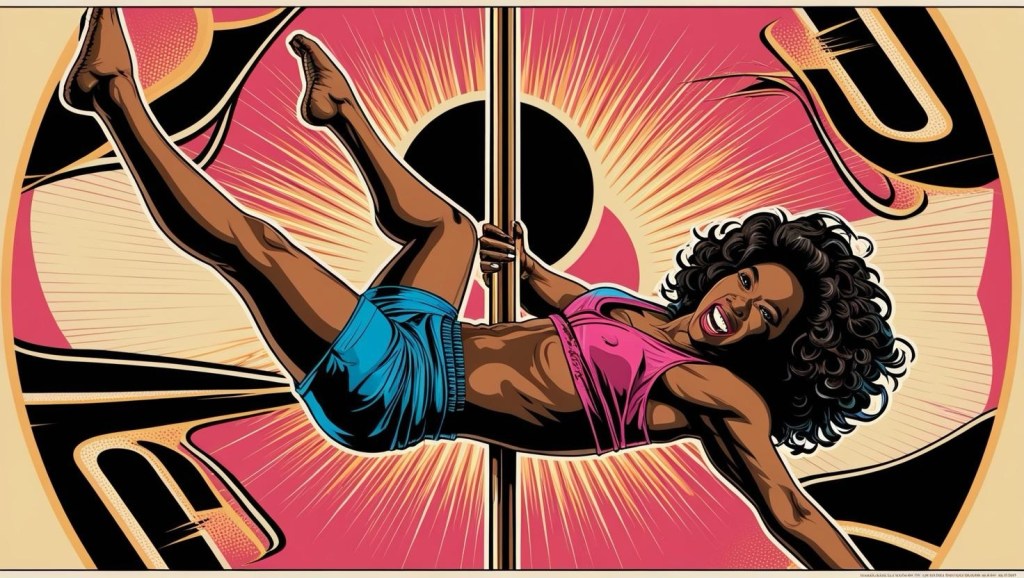
On the pole, you don’t have to say a word. Your movement becomes your language. Whether it’s sultry, sorrowful, powerful, or playful—you get to choose how you express yourself. You decide how to share ur story to others without ever speaking a word.
This isn’t just performance; it’s therapy. This is particularly true for women and non-binary individuals who have been shamed, silenced, or sexualized without consent. Pole allows you to reclaim your sensuality—not for anyone else’s gaze, but for your own healing.
As Psychology Today points out, dance therapy can help process complex feelings that are difficult to articulate, offering a non-verbal outlet for self-exploration and identity.
Ready to Begin Your Pole Journey?
If you’re curious about how to start pole dancing as a form of self-therapy, here are some essential tools to help you along your healing journey:
💪 Pole Equipment for Your Home Studio
X-Pole Starter Kit – Portable, easy to install, and great for beginners. Pole Crash Mats – A must for safety and confidence as you learn new moves.
👕 Fitness Wear That Moves With You
Grip-Friendly Shorts and Tops – Designed specifically for pole dancing, providing skin contact while keeping you comfortable. Knee Pads & Ankle Guards – Protect your joints while staying stylish.
✨ Bonus: Mental Wellness & Pole Journals
Pole Progress & Emotion Tracker – Log your moves, moods, and milestones.
The Elevate Her planner https://martathesmarter.com/wp-content/uploads/2024/12/7.png
You Are the Movement
Pole dancing is more than a fitness trend. It’s a form of emotional alchemy. It’s a mirror, a challenge, a celebration. It invites you to show up exactly as you are—wounded or wild—and transform.
If you’ve been carrying pain, know this: you can put it into motion. You can dance with it, cry through it, and climb above it.
Because every emotion has a beat. You just have to learn to move to your own rhythm!
 Search For Self
Leave a comment